From the course
to the wall.
Six short steps in the Builder, about ten minutes, and nothing to pay until the plate is exactly right. Here is what each one asks, and what to have in mind before you start.

Say what
the map can't.
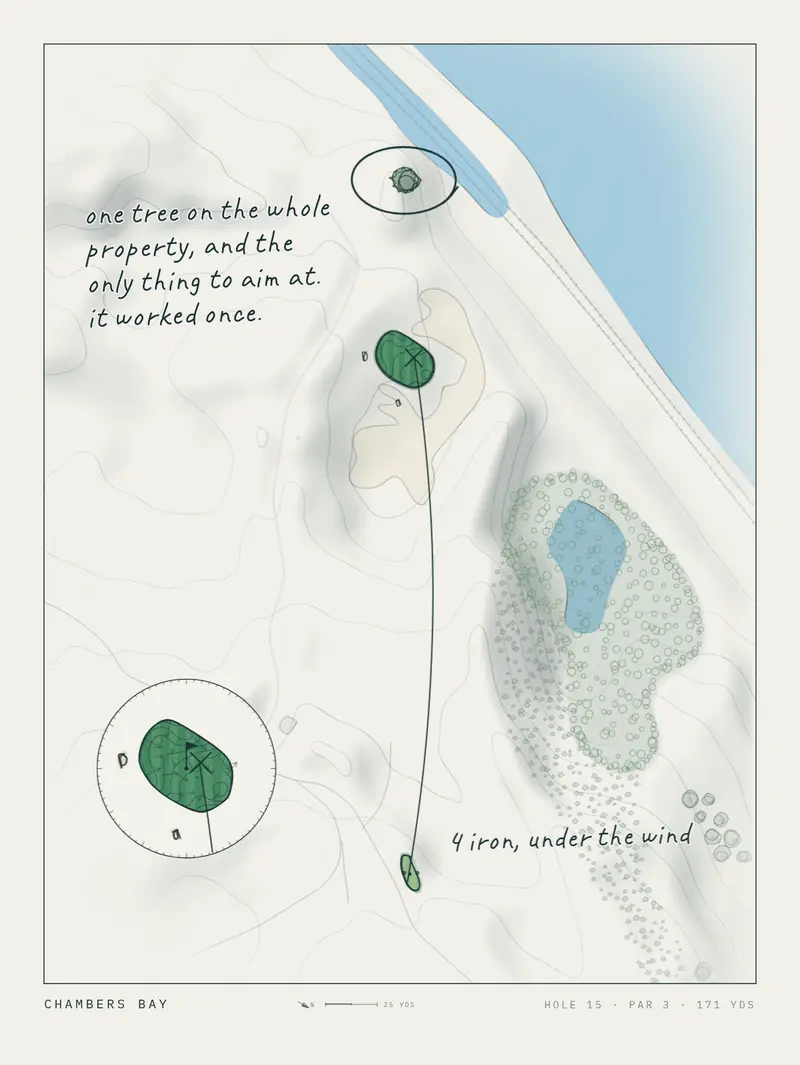
A yardage book is just paper until somebody writes in it. Same here. The drawing is the course; the words are the day. A few lines of the kind that go in the margin:
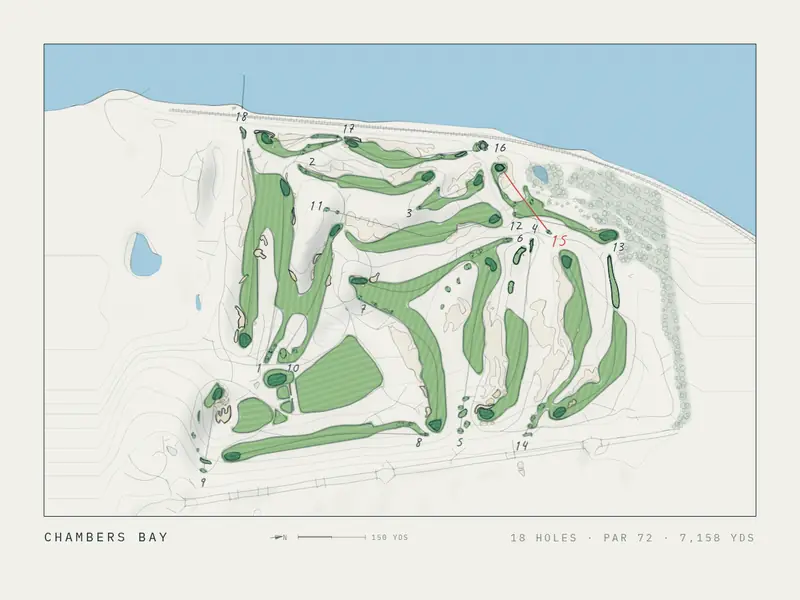
One hole, or the whole course.
The first question the Builder asks. The same survey makes both, drawn by the same hand.
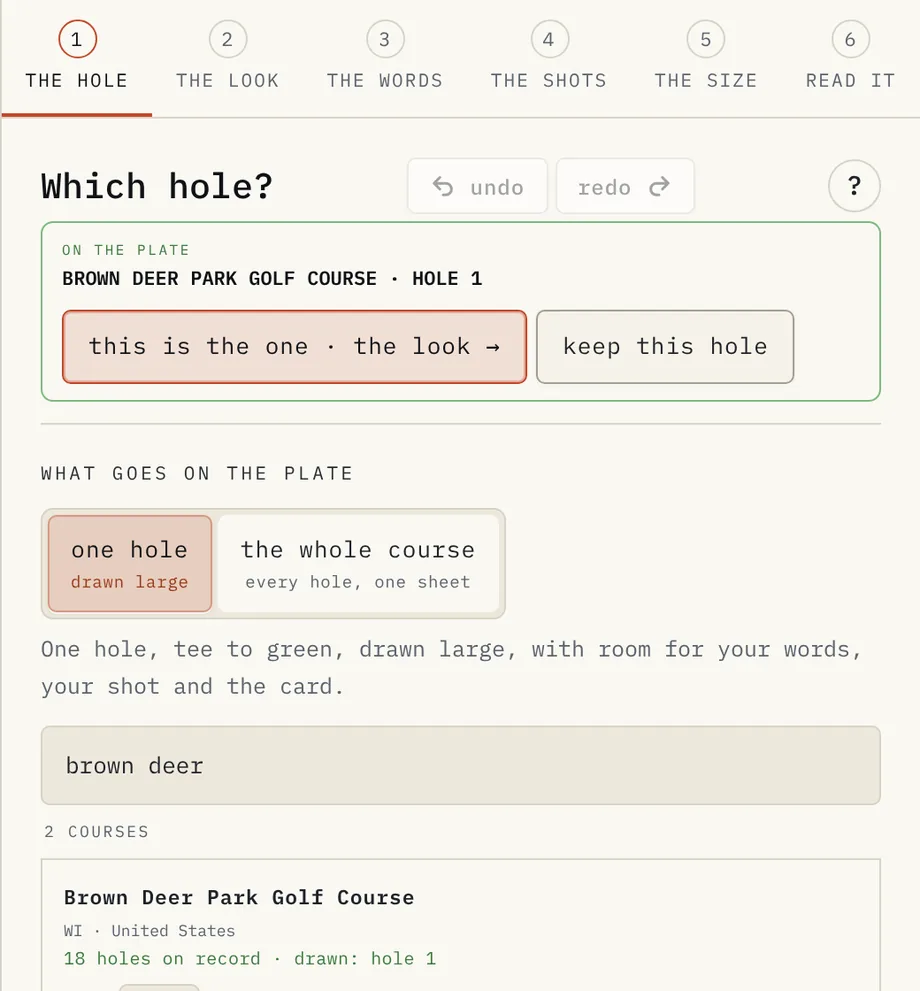
The six steps.
The hole
First, what goes on the plate: one hole, drawn large, or the whole course, every hole on one sheet. Then type your course. A hole we have drawn opens at once. Any other is drawn from the survey the moment you ask, and you watch it happen.
A course we have not reached yet opens as an aerial photograph, and you mark the tee and the green on it yourself. The framing is set for you: portrait, the hole drawn large. Change which way the plate hangs, or how close the drawing sits, if you like.
Have a line code from an email? Type it here and your plate comes back exactly as you left it.
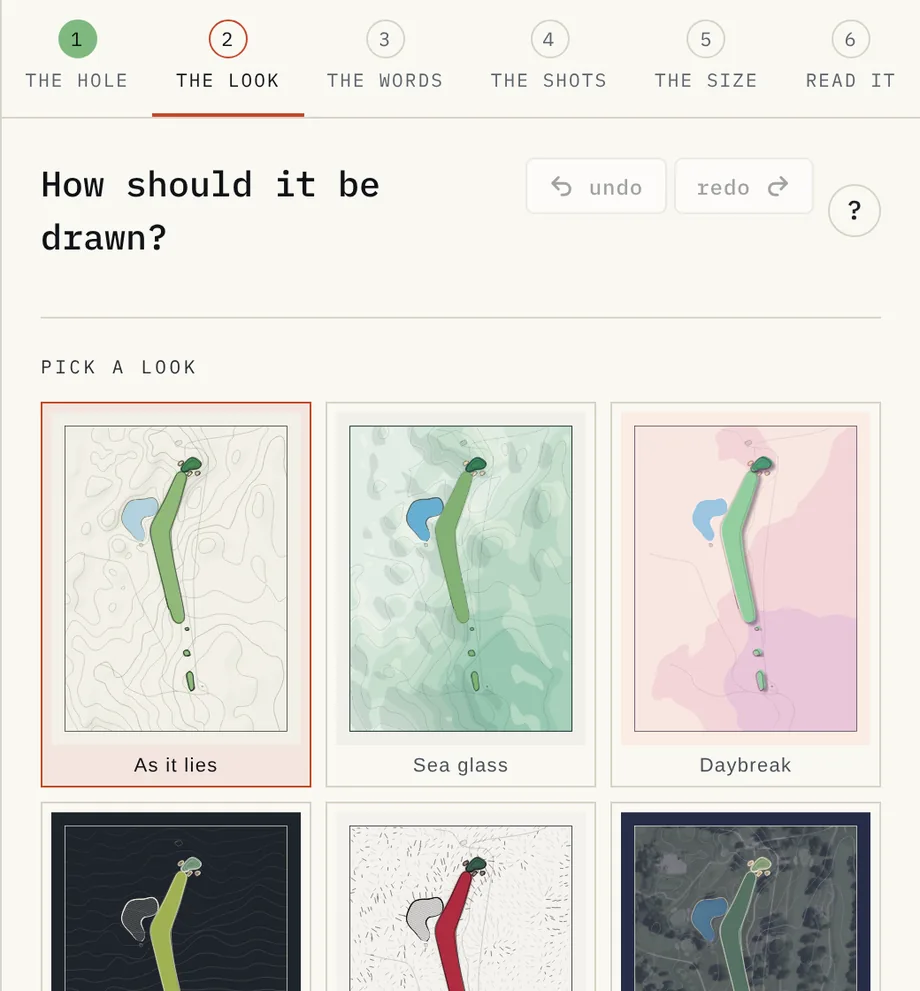
The look
Six looks, put together and drawn on your own hole, not a sample. Or set each part yourself: six bases, from the plain line drawing to the aerial photograph, the painted ground and the ridge lines, and sixteen colorways.
Then paper or foil. The foil edition prints on a metallic sheet: the water and your shot lines come back in gold or silver, and so can any note, or any name and score on the card, that you send to the metal. Its price shows with each size.
Every look is drawn on your own hole, so the tile is the plate you would get.
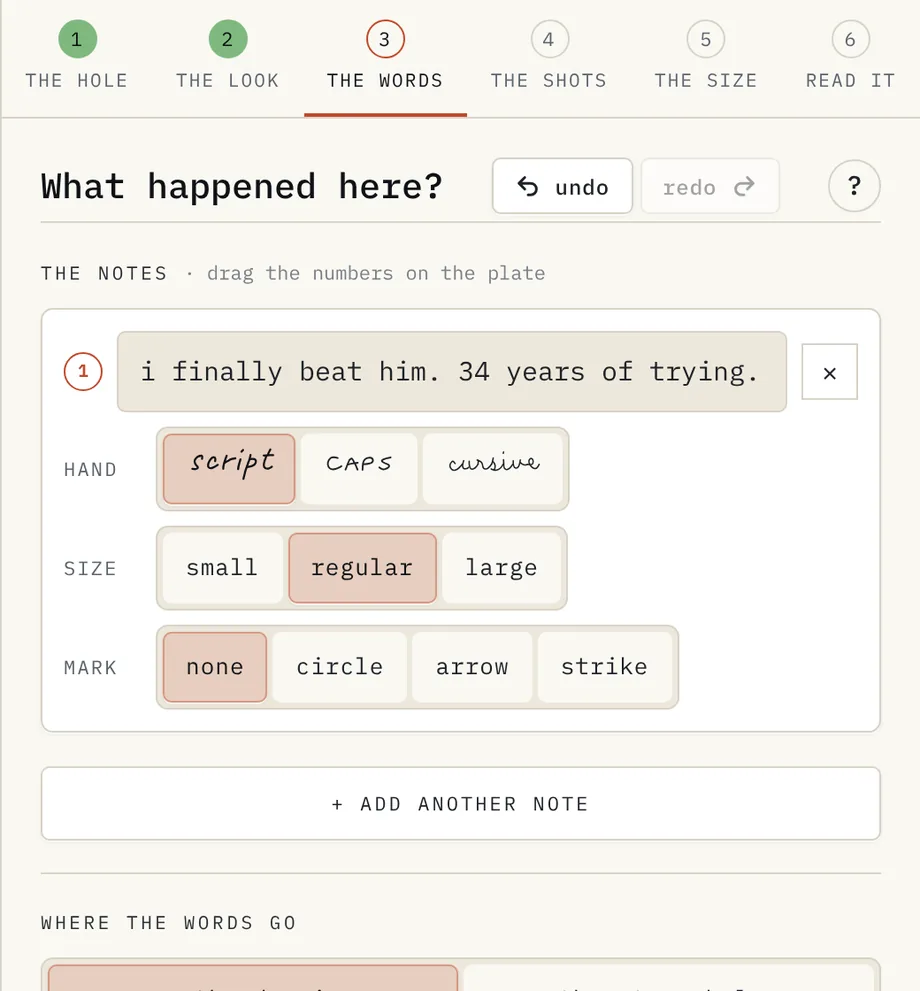
The words
The part only you can write. A line in the margin, an arrow to the spot, a ring around where it landed, a word struck through. Every word is drawn stroke by stroke in one of three hands, and you drag each note on the plate to where it belongs.
The words can sit on the drawing, in a column down the margin like a yardage book, written large under the hole, or on ruled lines under it for everyone who was there to sign. On the foil edition, any note can come back in gold or silver instead of ink.
Stuck for a first line? Start from a memory: a few beginnings to choose from, and every word yours to change.
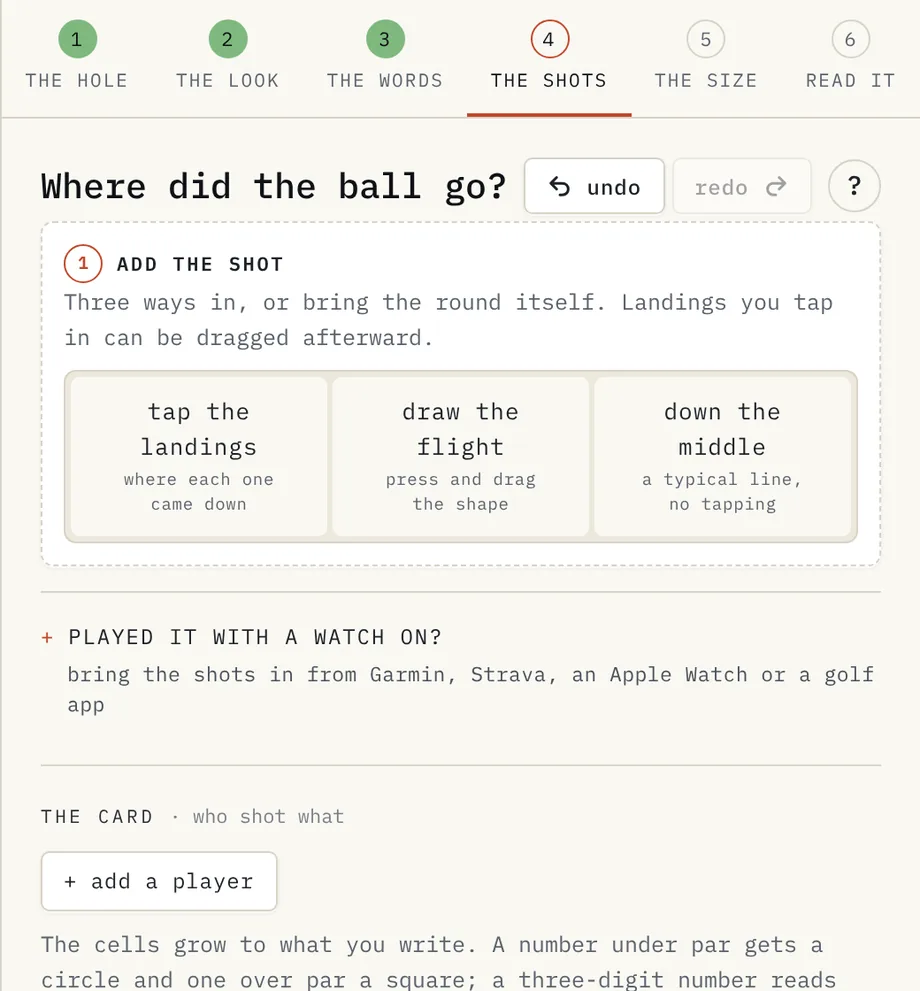
The shots
Tap where the ball came down, from the tee to the cup, and the line is drawn over the hole. Or press and drag the flight, or take a typical line down the middle. Played it with a watch on? Bring the round itself: a GPX file from your watch or a golf app, read on your device and never sent anywhere.
The scorecard goes on the plate if you want it, with circles and squares: ruled in the corner the old way, written in the plate's hand, set like the key of a map, or as one line in the caption under the drawing.
A landing you tap in can be dragged afterward, so a line that is nearly right becomes exactly right.
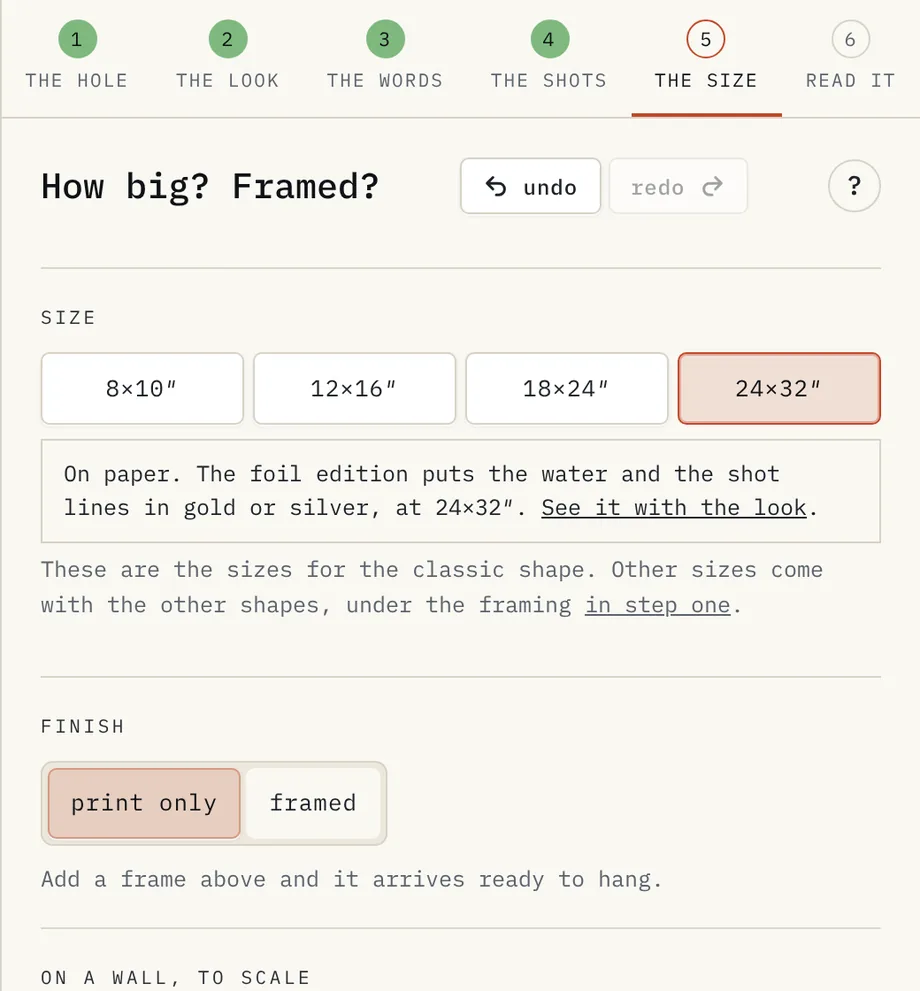
The size
Four sizes in each shape, from a desk plate (8×10 or 8×12) to 24×32 or 24×36, every one of them as a print or framed in real wood in eight colors. Each size shows its price, the foil edition included if you chose it in the look. Shipping is included.
The sizes follow the shape you chose in the first step. Want another size? Change the shape there.
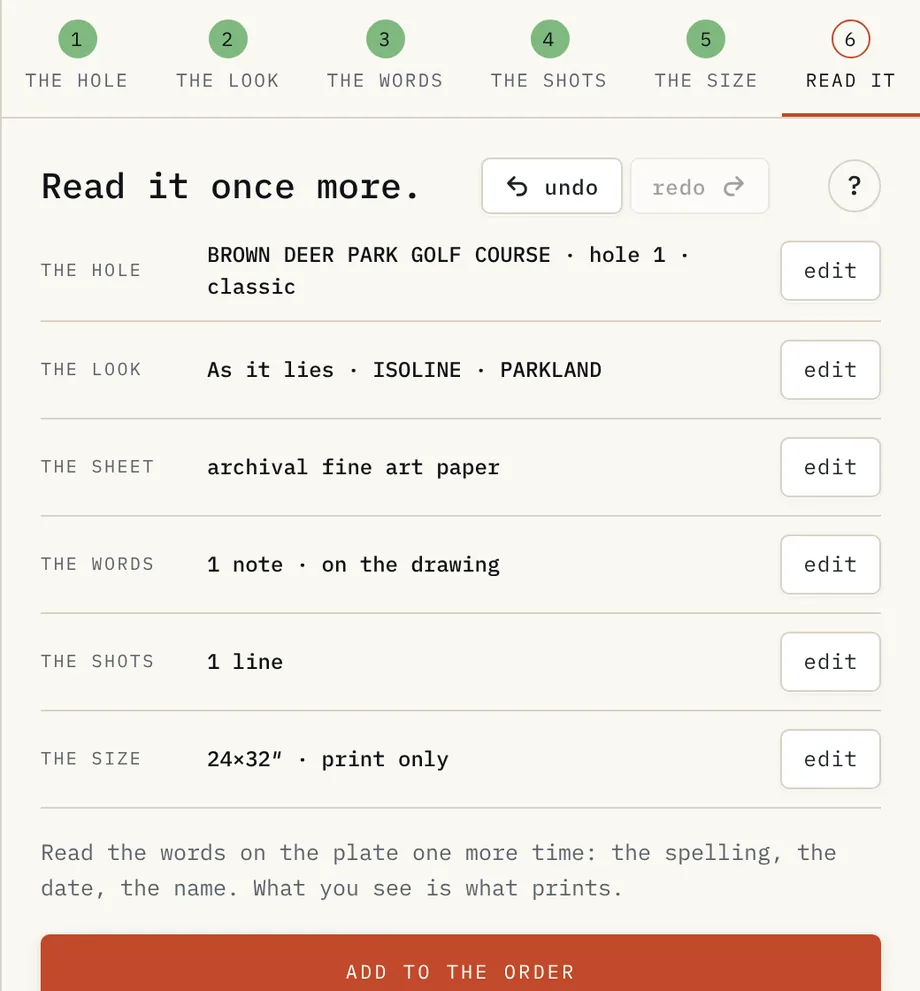
Read it
The whole plate read back to you, line by line, with a way back to any step. Read every word once more, then add it to the order. What you approve on screen is what prints. Nothing is charged until you pay at the checkout.
Not ready? Keep it, and we send you a link and a line code that open this exact plate for ninety days, and for good once it is ordered. Or pass it around first, and let everyone who was there add a line and a name.
An ordered plate is kept for good. Its line code reprints it, at any size, years from now.
Your course is waiting.
Search it, choose the hole, and watch it draw. Nothing is charged until you are happy with every word.